
Alumni in spotlight
Each month, we shine a spotlight on one of our outstanding alumni, celebrating their achievements, career journey, and impact. Know someone who should be featured? Contact Mariliis at mtoitoja@b-aff.org.
AUGUST 2026
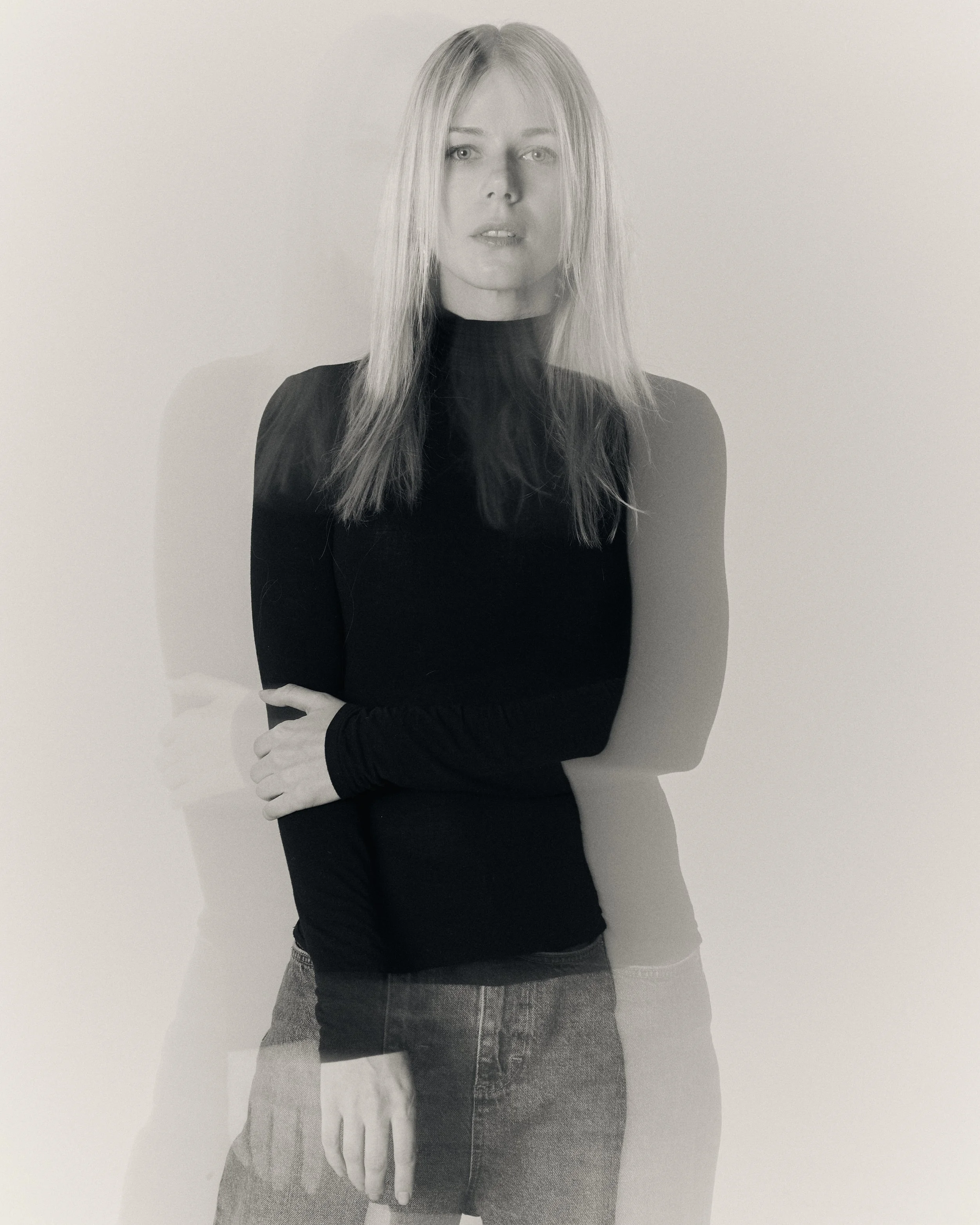
Sandra Luks
Fashion designer and photographer
-
I'm a fashion designer, photographer, and a part-time professional hoarder of things other people have given up on. LUKS is built on the idea that sustainability shouldn't look like a compromise but rather something desireable. I used to work with leather but since 2022 I moved on to work with mostly denim to create bold garments that would make the wearer stand out and feel all powerful.
-
It really depends on the product I’m making. If I need to completely break down a pair of jeans into thread-level, I want to use old jeans, that could never be sold on second hand market (either they have holes beyond repair or they are just so hideous that selling them would cost more than the profit). I have also worked with a denim factory and they have donated leftover denim to me that I use to create ‘’new’’ garments according to my specific designs. But mostly, I like to operate on a level of ‘’this piece (or garbage) has potential”.:D
-
Realizing that cloning myself is, unfortunately, still not an option. In post-consumer upcycling, scaling is almost impossible or really expensive cause no one realises the amount of hours going into the work. So the product really needs to feel like luxury to justify the price cause I always sa, labour is hidden. Even if made from discarded materials, customer must not feel it is ‘’second-hand’’ as a first thing. Nostalgia, sentimental thoughts, yes. Old worn items, no! So it’s important to play with the design and experiment with materials to ‘’invent’’ a ‘’new’’ garment or accessory.
Check out cool stuff from Sandra Luks on their website and Instagram.
JUNE 2026
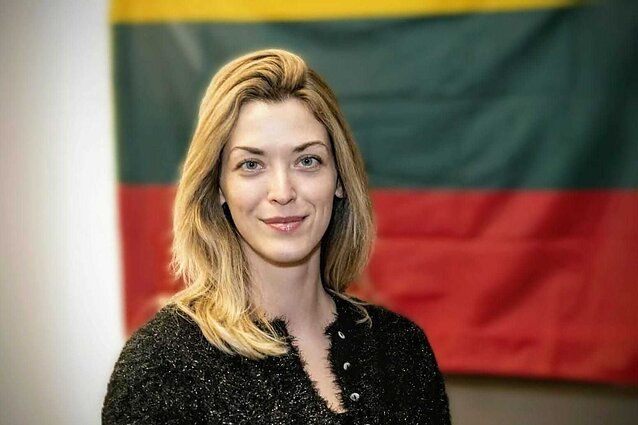
Dovilė Meliauskaitė
Commercial Attaché in New York
-
As many BAFF alumni will know, talking about Lithuania in the US can feel like painting on a blank canvas. There is goodwill, but no prior picture. As Lithuania's Commercial Attaché in New York, I help Lithuanian companies enter the US market, meet the right people, and be understood by investors, customers, and partners. I also work with US companies and investors looking at Lithuania as a place to invest, hire, build, or scale into Europe. In practice, my output is the right introduction at the right moment. Recently that meant hosting a Lithuania-focused event during New York FinTech Week. Now I am preparing for New York Tech Week and Climate Week, and building focused moments from Boston to Austin to Atlanta. My first year has mostly been about building the network. I arrived in New York without one. Twelve months in, I can bring together founders, investors, regulators, lawyers, and public-sector partners. That network now supports go-to-market planning, customer discovery, investor meetings, export partnerships, and market entry conversations. US conversations have led to Lithuania visits, site-selection discussions, and commercial opportunities for Lithuanian companies. These take time, but the pipeline is filling up. I focus where Lithuania has demonstrated traction: fintech, defense and dual-use, consumer tech, energy, life sciences, and cybersecurity. A good example was the presidential defense forum I helped organize during United Nations General Assembly week in 2025. For Lithuanians, the story can feel familiar by now: Rheinmetall investing in Lithuania, Germany deploying a brigade, defense spending exceeding five percent of gross domestic product. For the New York audience, those dots still needed connecting. This year, I am applying the same logic to energy resilience. Lithuania's break from the Soviet-era electricity grid and integration with Western Europe in 2025 is a story of independence, infrastructure, and execution. The broader point is that Lithuania can speak in many success stories because it has them. The market simply has not heard many of them yet, even if they sound repetitive to us. My job is to bring them into the right rooms and turn awareness into commercial next steps.
-
Working with Lithuanian companies on the US market, I keep coming back to communication. Many Lithuanian founders are reserved and evidence-based. That can be a strength. In the US, especially with investors and enterprise partners, it can also be misread as lack of ambition or confidence. The story often opens the door before the evidence gets a chance to do its work: why this problem, why now, why this team. In an environment where many companies compete for investor attention, even a strong founder can be missed if the case is not clear within seconds. I see this now as I prepare for New York Tech Week by a16z, where Lithuania will be part of two official events. I am organizing pitch training with an American coach because the elevator pitch is a real thing here. Sometimes there is no second chance to explain yourself. The same applies beyond startups. A company may be well known in Lithuania or Europe and still arrive in the US as a smaller, lesser-known player. That matters whether the company is raising venture capital, looking for an enterprise partner, testing e-commerce entry, or building a broader US go-to-market plan. The other lesson is that positive feedback does not automatically mean interest. American audiences can be warm and encouraging, but “this is a cool product” does not mean commercial intent. I try to help companies qualify that warmth quickly: what is the next step, who is the decision-maker, is there a timeline? Without that, a friendly meeting is just a friendly meeting.
-
Bringing Americans to Lithuania is one of my favorite things to witness. A US team arrives polite, careful, and still testing the credibility of the locals. They ask about hiring timelines, regulation, decision-making speed, and who to call when something gets stuck. The Lithuanians answer with concrete numbers and actual contacts. By the second or third meeting of the day, the questions change. They are no longer asking whether something is possible. They are asking how fast and when they can start. That pattern has shaped how I work. My role is to create the conditions for that shift: identify the right US decision-makers, get them to Lithuania, put the right people in the room, and make sure the follow-up is spot-on. That matters in site selection and foreign direct investment because confidence builds through direct experience. A visit can turn Lithuania from a spreadsheet option into a place where executives can imagine hiring, operating, and growing.
-
I love New York as a place to live and work. Compared with other places I have lived, people here are more open to conversation, and those conversations come from every direction. In one week you might sit with founders, investors, operators, lawyers, policymakers, and diaspora leaders from a dozen different countries. A polite coffee that was supposed to be fifteen minutes runs to ninety, and six months later that conversation comes back as an introduction that leads to a deal. In this market, a warm introduction is usually the only introduction that works. That is also why I genuinely enjoy making the city easier to read for European companies and visitors. From New York, I see Lithuania as smaller and more capable at the same time. As small countries, we have to explain what we built, why it matters, and what it proves. When BAFF alumni pass through New York, I look forward to connecting and offering a glimpse of my perspective on this city.